

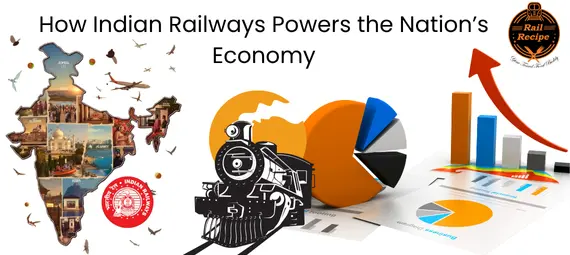
Indian Railways (IR) is truly the backbone of India’s growth and development. Operating more than 19,000 trains and 7,112 stations, it stands as Asia’s second-largest and the world’s fourth-largest railway network. By connecting people, industries, and regions, Indian Railways plays a vital role in boosting India’s economy and strengthening social unity. With over 13 lakh employees, it remains one of the country’s largest employers and a national pride that drives progress and prosperity.
The Role of Indian Railways in India’s Growth
Indian Railways is the primary mode of passenger and freight transport across the country. It connects urban and rural areas, enabling mobility for millions every day. Beyond just transportation, the railways link markets, supply chains, and communities, supporting agriculture, manufacturing, tourism, and trade. Over the decades, Indian Railways has been a major unifying force, speeding up the nation’s industrial and agricultural development and shaping India into a modern economy.
Connectivity and Infrastructure
Divided into 17 zones and 68 divisions, Indian Railways covers every region of the country. Physiographic and economic factors have influenced the railway network’s spread. The northern plains, with their fertile lands and dense population, are well connected, while tunnels and bridges in hilly and coastal regions link remote areas. Despite geographical challenges, the railway system continues to expand steadily, with new projects and modernization efforts ensuring smoother connectivity across India.
Contribution to Industry and Agriculture
The growth of industries such as textiles in Mumbai, jute in Kolkata, and coal mining in Jharkhand owes much to railway expansion. Railways transport raw materials and finished goods efficiently, helping industries flourish. In agriculture, railways have enabled farmers to reach distant markets, sell their products nationwide, and earn better profits. Fast transport of perishable goods and agricultural equipment has made farming more commercial and profitable, boosting rural income and food supply chains.
Must Read : The World Highest Railway Bridge Over the Chenab River
Indian Railways in the Modern Era
As of 2025, Indian Railways operates on a total track length of 126,500 kilometers and connects over 7,300 stations across the nation. It runs around 13,000 passenger and 9,000 freight trains daily, carrying millions of passengers and tonnes of goods each year. The Indian government has made huge investments to modernize railway infrastructure, increase capacity, and enhance safety. The gross revenue for FY 2024-25 is projected to exceed Rs 2.5 lakh crore, showcasing strong performance in both passenger and freight segments.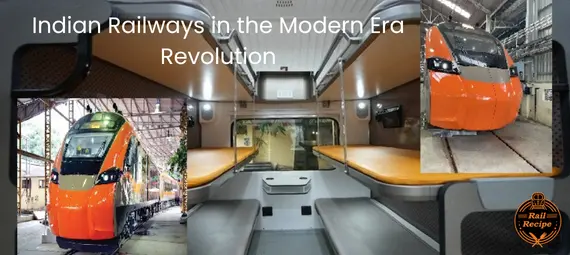
Major development projects include the National Rail Plan 2030, which aims to make Indian Railways “future-ready.” This plan focuses on expanding capacity ahead of demand, achieving 100% electrification, and increasing freight share to 45% by 2030. India’s semi-high-speed and bullet train projects are under development, and the iconic Chenab Bridge—the world’s highest railway bridge—is now operational. These efforts highlight India’s vision for a technologically advanced and sustainable railway system.
The Economic Impact of Indian Railways
Indian Railways contributes around 1.5% to India’s GDP, supporting industries, trade, and agriculture. In 2025, freight revenue has crossed 20 crore, driven by strong demand for coal, cement, steel, and agricultural produce. The sector continues to generate employment, with over lakhs of jobs sustained directly and millions more indirectly through logistics and infrastructure development. With renewable energy initiatives and digital ticketing systems, Indian Railways is aligning with India’s 2047 vision of becoming a developed nation.
Government initiatives like Foreign Direct Investment (FDI) in railway infrastructure, Dedicated Freight Corridors (DFC), and smart station redevelopment projects are transforming the passenger experience and boosting logistics efficiency. These measures ensure that the railway continues to serve as India’s economic lifeline in the years ahead.
Why Indian Railways is the Backbone of India’s Growth
Indian Railways is more than a transportation network—it is the heartbeat of India’s economy. It connects people and opportunities, strengthens industries, and supports farmers. As India’s most affordable and efficient transport system, it plays a critical role in maintaining economic balance between urban and rural areas, ensuring inclusive development and sustainability.
Frequently Asked Questions (FAQs)
- Why is Indian Railways called the backbone of India’s growth?
Because it connects all parts of the country, supports trade and agriculture, and fuels industrial and economic progress. - How does Indian Railways contribute to India’s economy?
It provides affordable transport for passengers and goods, supports industries, and contributes around 1.5% to the nation’s GDP. - What modernization steps has Indian Railways taken recently?
Projects like 100% electrification, semi-high-speed trains, smart stations, and digital freight systems are improving efficiency and comfort. - How does Indian Railways help farmers?
It allows farmers to transport their produce quickly and sell in larger markets, increasing their income and reducing wastage. - How many people are employed by Indian Railways?
Over 13 lakh employees work directly for Indian Railways, making it one of the largest employers in the world.
Indian Railways Modernization and Online Food Booking on Train
Indian Railways is the lifeline of India, connecting people, regions, and industries while driving economic growth. With modernization, sustainability, and efficiency at its core, the railway continues to shape India’s future. Passengers can now make their train journeys more enjoyable by ordering fresh, hygienic meals on train through RailRecipe. Simply download the RailRecipe Android or iOS app or book your meal in train by calling the toll-free number 8448440386 and enjoy delicious food right at your seat while traveling on the tracks of India’s growth.